The process of replacing a patients diseased hip is technical and requires a skilled surgeon who has vast experience in performing total hip replacement surgeries. Dr Moore is fellowship trained in adult joint reconstruction and has been in practice nearly 30 years, performing thousands and thousands of total hip replacements. As technological advancements evolve in Orthopedics, Dr Moore has remained on the cutting edge of those advancements. Dr Moore was not only one of the first surgeons to perform outpatient joint replacement joint replacement in North Carolina. He was also one of the first surgeons in North Carolina to use Robotic technology when performing total knee replacements and the first surgeon in North Carolina to perform outpatient total knee replacement/arthroplasty using Rosa Optimize robotics platform.
Recently, Dr Moore once again contributed to the advancement of orthopedic surgical care in North Carolina (and Moore county) when he performed his first direct anterior total hip replacement using OrthoGrid Hip Ai. This is a milestone for our community which allows patients of North Carolina and surrounding areas access to the most advanced surgical technology. Dr Moore’s surgical skills married with advanced technologies certainly gives his patients the very best surgical care possible. Although the direct anterior approach using Ai is a more recent technique Dr Moore is performing, he past experience performing two incision anterior approach total hip replacement.
For most of his 25+ years in adult joint reconstruction, Dr Moore performed total hip replacements using the mini posterior approach with exceptional outcomes. Dr Moore will continue to perform total hip replacement surgery using the mini-posterior approach but now will also treat patients hip disease using the direct anterior approach using the assistance of Ai in a patient specific manner. Determining the surgical approach that best fits the patient will be done by Dr Moore based on multiple factors including body habitus, musculature and preference.
Reduce Hip Pain With Total Hip Replacement Surgery
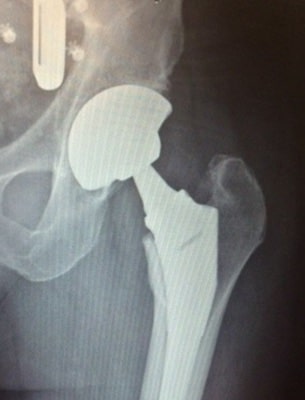
What Is A Hip Replacement?
A hip replacement is a surgical procedure that replaces the abnormal or worn surfaces of the hip joint. The surgery is typically performed to reduce hip pain from arthritis or to repair a fractured hip. In this procedure, Dr. Moore will remove the diseased, not well-functioning hip joint using a titanium/tantalum porous metal implants and high grade polyethylene of ceramic or metal interface. It is typical that your hip replacement would not require the use of bone cement, which is only used in rare cases.
Conditions that lead to Hip Replacement Surgery:
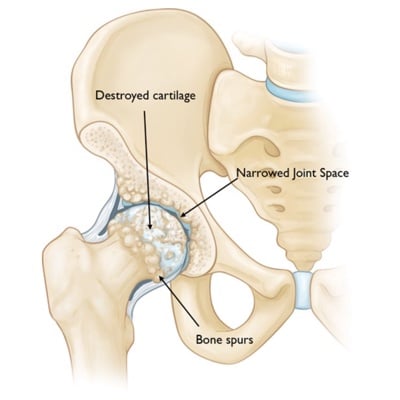
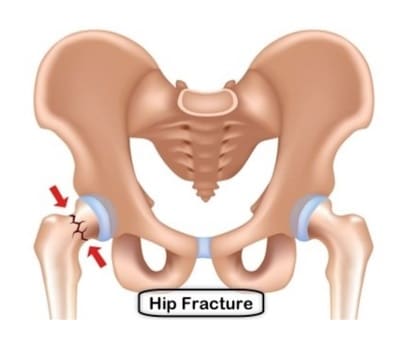
Post-Traumatic Arthritis
Avascular Necrosis is a condition that occurs when bone loses blood supply. Blood is required as our bones are living tissues, when the supply of blood is interrupted, the bone begins to die. If the blood loss is not stopped or treated, the bone will collapse.
At some point, however, if the arthritic process increases in severity, patients will have increasing pain and decreasing function. At this stage, it is time to consider a total hip replacement seriously. The decision to perform the surgery is usually based entirely on the patient’s complaints.
DIRECT ANTERIOR APPROACH using OrthoGrid Ai vs. Traditional MINI-POSTERIOR APPROACH
The surgical approach Dr Moore will choose for you depends on your body size, bone strength, musculature and radiographs. Although patient preference is considered, Dr Moore will taylor your care to best fit your needs and anatomy. Dr Moore’s goal is that you have the best long term results with return of function. Dr Moore will use his expertise, experience and evolving technology to accomplish that goal for you.
The Direct Anterior approaching using OrthoGrid Ai is the most advanced approach to total hip arthroplasty currently available in arthroplasty. OrthoGrid Ai reads points on your radiographs prior to surgery as well as during your surgery to achieve functional pelvic plane tracking, offset and precise leg length and cup positioning.
The Mini-posterior approach is the surgical technique Dr Moore has done primarily and successfully the past 25+ years. Dr Moore does continue to use the approach in a patient- specific manner. Currently not all surgical sites offer the technology needed to perform direct anterior approach using Ai and often times the mini-posterior approach is the approach that would provide the best/exceptional outcome regardless of technology. Dr Moore’s fellowship training first prepared him to surgically and medically care for patients. His 25+ years of experience, performing approximately 7,500 total hip replacements
When choosing a surgeon for your total hip replacement, keep in mind that a surgeon (Dr Moore) with substantial experience-who also uses modern technology is the best possible scenario. Extensive surgical experience provides surgical judgement, technical refinement, pattern recognition, decision making, and complication management. Newer technologies aren’t automatically better for every patient. Dr Moore’s experience helps him put evolving tools into perspective without allowing technology to dictate the surgical procedure. Alternately, advancing technologies provide more precise preoperative planning, more precise implant positioning, patient specific care, computer and robotic guidance and better imaging and navigation/3-D visualization. Technology can increase precision, but it does not replace surgical judgement.
Dr Moore has extensive experience but continues to adapt his practice as evidence, implants, techniques and technology evolves. Be assured that Dr Moore will choose the approach for your procedure with the care and thought he would give to a family member or colleague.
What Are the Benefits of Total Hip Replacement?
Total hip replacement isn’t something to take lightly, but there are myriad benefits of these amazing procedures. If you’re even considering this procedure odds are you’re infrequent, if not chronic pain. You probably have trouble sleeping, especially if one hip is worse than the other and you roll onto it. You’ve probably found yourself eliminating one activity after another just to avoid the pain.
So, what’s the benefit of being able to walk around the block without pain? How fun is it to be able to take the dog for a walk yourself? What’s the benefit of comfortable nights sleeping instead of waking with a shock of pain when your hip positions the wrong way? What’s the benefit of returning to things such as playing golf or hiking?
Total hip replacement is one of the most successful operations performed in the medical world, even more, the case in the experienced hands of Dr. Moore. Hip replacement can:
- Eliminate or dramatically lessen your pain
- Restore movement
- Allow you to return to activities you love
- Reduce your risks of heart failure, depression, and type 2 diabetes
- Make everyday activities something to look forward to rather than dread
What Should I Expect With a Hip Replacement?
A hip replacement replaces the abnormal or worn surfaces of the hip joint. The specifics of the procedure depend on what type of hip replacement you need.
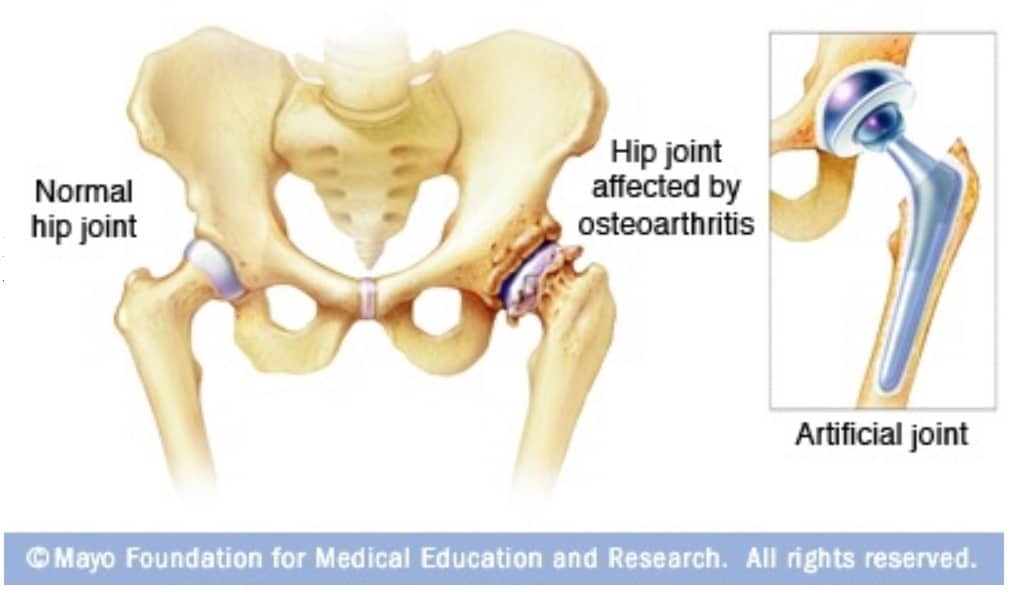
Total Hip Replacement
The process of replacing a patients diseased hip is technical and requires a skilled surgeon who has vast experience in performing total hip replacement surgeries. Dr Moore is fellowship trained in adult joint reconstruction and has been in practice over 25 years, performing thousands and thousands of total hip replacements.
The process of replacing a hip involves removal of the diseased femoral head. Removal of the femoral head allows Dr Moore access and visualization of the diseased acetabulum. Dr Moore will use specialized acetabular reamers to remove the diseased acetabular bone sequentially.
Once this is accomplished he will replace the disease and removed cartilage with a trabecular metal acetabular component in which your bone will grow into the porous metal component. A high grade polyethylene liner is then placed in the metal component and locked into place. At this point, Dr Moore will address the top or proximal end of the femur/the end the femoral head was removed from. He will again and sequentially use specialized femoral broaches to create an envelope that matches the femoral implant.
The implant that Dr Moore uses in the femur also has porous metal pads that your native bone will grow into. Once this part of the procedure is completed Dr Moore and his surgical team begin trialing femoral head sizes and lengths ensuring the most stable hip and equal leg lengths. Dr Moore will choose the appropriate size femoral head which will be either ceramic or titanium. Dr Moore’s patients are up and walking the day of surgery while putting full weight on their operative leg. Modern total hip replacement implants last 25-30 years.
How Long Will It Take to Fully Recover From a Hip Replacement?
Total rehabilitation after total hip replacement ranges from 6 weeks to 6 months. Patients must follow some basic posterior hip precautions for 3 months but during the first 3 months patients’ pain is fast resolving and mobility fast improving. There are some milestones to consider with recovery from total hip replacement:
- Driving – Dr Moore restricts post-operative total hip replacement patients from driving for approximately 2-4 weeks. You will not be able to drive while using narcotic pain medication.
- Walking – You will begin walking the day of your surgery putting full weight on your operative leg. Dr Moore does request post-operative patients use a walker or cane for 4 weeks after surgery.
- Showering – You may shower the day after your total hip replacement surgery. You will be discharged from your surgical site (hospital or surgery center) with and occlusive bandage over your incision. You will be sent home with additional bandages for daily showering and dressing changes.
- Work – Return to work time depends on the type of work you do, the physicality of your work, and your desire/need/ambition for returning to work. Most employers have work-site-specific paperwork for us to fill out. Dr Moore fills out all paperwork of this type, indicating the employee will be out 12 weeks and then he determines each patient’s ability to return to work earlier on a patient-by-patient basis.
- Sex – As long as the patient is following their 3 months of posterior hip precautions, sex is not limited. Patients are provided with a booklet outlining safe sexual positions at their pre-operative appointment.

Will I Need Additional Physical Therapy After Hip Replacement?
It is unusual and atypical for patients to require additional physical therapy after total hip replacement surgery. One exception to this rule are patients with a persistent limp. Unfortunately, our brains don’t always keep pace with our bones and joints, therefore, some patients brains continue to send abnormal gait signals. In these cases, gait training is ordered to re-train the brain to walk limp free.
Is Total Hip Replacement Recovery Overly Painful?
Despite the fact that our hip joints bear constant loads except when lying down or sleeping, the pain after hip replacement is less than after knee replacement. After surgery, your pain changes from chronic aches with occasional sharp jolts of pain to the pain that accompanies wound healing, swelling, and inflammation. Hip replacement patients often report little to no pain around the 2-6-week mark.

What is Revision Hip Replacement?
Revision total hip replacement surgery is done on patients that have already had total hip replacement but that replacement has failed. There are various reasons that a total join replacement can fail including infection, wear of the components (early prostheses did not last as long as current, modern implants), dislocation, fracture and loosening. Should Revision surgery be required, Dr. Moore replaces failed components from the original replacement with more modern implants.
What Are the Risks and Complications of Hip Replacement?
Complications with hip replacement surgery are rare, occurring in less than two percent of patients. These are the most common complications:
- Infection — Infection can occur superficially in the wound or deep around the prosthesis. It can even occur years later, as infection from elsewhere in your body can spread to your new hip.
- Blood clots — Blood clots in the leg veins or pelvis (remove or pelvis) are one of the most common complications. If a clot breaks free and travels to your lungs, it can be life-threatening. Dr Moore mitigates this risk by putting patients on an appropriate blood thinner for a short time after surgery. Walking also helps prevent blood clots from forming.
- Leg-length inequality — The main goal of total hip replacement is pain relief. When Dr Moore completes Total Hip replacement surgery, he ensures that the replaced hip is stable (decreasing risk of dislocation). A secondary consideration is leg length restoration as often times a diseased hip translates into a shorter leg. Occasionally, in order to accomplish stability, the replaced leg is millimeters longer or shorter than the non-replaced leg. Dr. Moore makes every effort to keep your leg lengths equal, sometimes it may be necessary to shorten or lengthen the leg slightly in order to maximize the stability and biomechanics of the hip. A shoe lift can rectify this down the road if necessary.
- Dislocation — Dislocation of the hip joint is not common, but possible when patients don’t follow their hip precautions as instructed for 3 months after surgery. The 3-month period following hip precautions after surgery allows the soft tissues of the hip to heal around the hip joint itself which also helps with hip stability. Falls can also cause dislocation. Infection can also cause dislocation.
- Loosening and wear — Over time, the hip prosthesis may wear unusually or loosen. This can simply be the result of everyday impacts from normal activity, but you can exacerbate the process with high-impact activity. Tissue may also grow between the components and the bone, leading to loosening. Infection can also cause loosening.
- Metal sensitivity — As you live with your artificial hip, tiny bits of the surface of the new hip joint wear off as the ball and socket pieces rub against each other. Some people are sensitive to this metal.
Hip Replacement Success Rate
Hip replacement surgeries are very successful regarding their primary goal, pain relief. Approximately 90% of patients have complete pain relief. Most patients do not require the need for assistive devices to walk. Most patients return to their active lifestyle within 3 months of their surgery completion.
A pretty special milestone in Moore County!
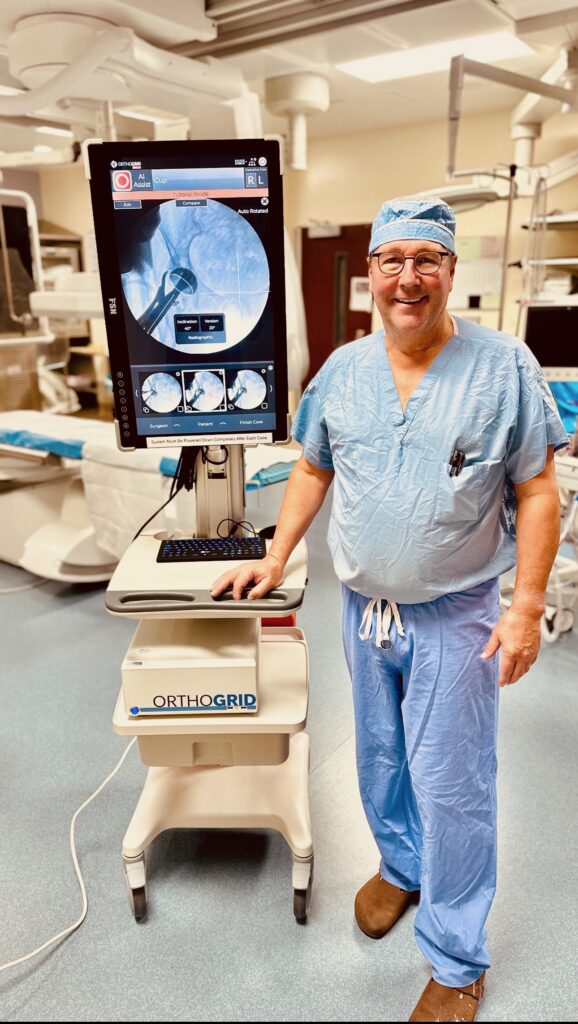
Moments like this are a great reminder of what progress in orthopedics really looks like.
We inherit the work of those who came before us, and our responsibility is to leave it better than we found it.
I believe Orthopedics is a field built on that principle.
Every generation of surgeons, engineers, and innovators has taken what was known, questioned what could be better, and pushed the craft forward.
Today, technology is becoming another instrument in that pursuit.
Not to replace experience.
Not to replace judgment.
But to give those who practice the craft better tools to do what they have always sought to do: restore function, improve outcomes, and give patients their lives back.
Progress rarely happens all at once.
It happens one question, one idea, and one improvement at a time.
To be part of that progression is both a privilege and a responsibility.
Thank you Dr. Moore!
Returning to Activity After Hip Replacement
Most patients improve their activity levels significantly after surgery. Patients are encouraged to walk, hike, ride a bike or exercycle, swim, play doubles tennis and play golf. Unfortunately, we do not support sports that cause significant impact and twisting such as running, singles tennis, or downhill skiing.
Schedule Your Hip Replacement Consult Today!
For more information about Total Hip Replacement Surgery with Dr. Moore please contact our at 910.295.0224, or fill out the appointment request form on this page. Our practice looks forward to caring for you!
Patient information
- Outpatient Total Hip Replacement with Same Day Discharge
- Hospital Based Total Hip Replacement with One Night Hospital Stay
- Pathway to Recovery Hip Packet
- Dental Clearance Letter (Hip)
- Medical Provider Clearance Letter (Hip)
Read what our patients are saying!
Click here to read more reviews.